
Heartbreaking, and Apt.
Updated: Sep 25, 2024
Minimalist art honoring victims of the Nazi Holocaust stops you in your tracks.
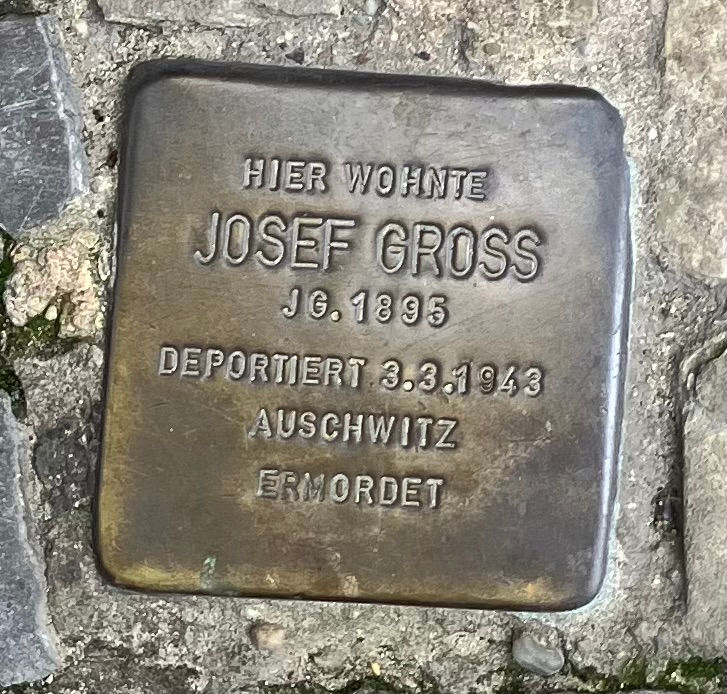
HERE LIVED
JOSEF GROSS
BORN 1895
DEPORTED MARCH 3, 1943
AUSCHWITZ
MURDERED
This is a Stolperstein.
A Stolperstein, or stumbling stone, is a small concrete cube with a brass plate inscribed with the name and life dates of victims of Nazi extermination or persecution. Jews. Sinti. Roma. Homosexuals. The infirm. Jehovah's Witnesses. Trade unionists. Political opponents.

They are usually embedded in the pavement outside the last known voluntary place of residence of the individual memorialized. There are 17 Stolpersteine in front of the multi-family building where I live in a quiet neighborhood of Berlin.
Over 70,000 Stolpersteine are installed in more than 1200 cities across 21 countries in Europe, making Stolpersteine the largest memorial in the world.
Conceived by the artist Gunter Demnig, the first Stolperstein was laid in January, 2009. They are financed by sponsorship, and anyone can sponsor a Stolperstein. Demnig's website gives clear and thorough information about the history of the project and everything you would want to know, including links to tracing services, so you can locate information about individual victims of the Holocaust in order to memorialize them where they last voluntarily resided.
Almost every Stolperstein ends with the word Ermordet. Murdered.
But not all. Sometimes, rarely, the ending of the person is Unbekannt, Unknown.
Even rarer, Überlebt, Survived.
And occasionally you find one that says Flucht in den Tod, literally, Escaped into Death.
It doesn't mean that the person was shot while fleeing.
It means suicide.
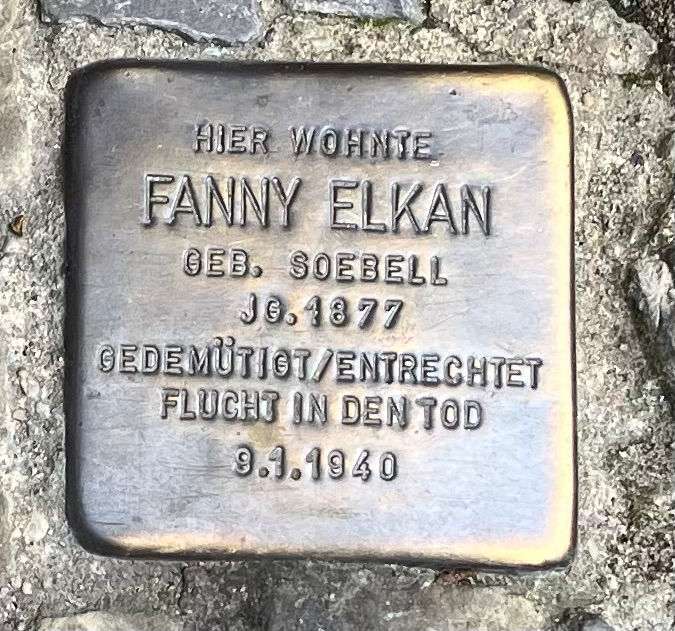
HERE LIVED
FANNY ELKAN
NEE SOEBELL
BORN 1877
DEBASED/DISENFRANCHISED
ESCAPED INTO DEATH
SEPTEMBER 1, 1940
The German word for suicide is Selbstmord, but the Stolperstein doesn't employ it. Instead, it uses the phrase Flucht in den Tod.
That phrase is a work of art.
Flucht in den Tod evokes agency. It renders the act an active choice, a refusal to submit to the horrors of a certain future, a future devised by a group of men and implemented with precision on those deemed undesirable.
Like Stolpersteine themselves, the phrase Flucht in den Tod is heartbreakingly powerful.
Tragic.
And apt.
© Sarah Knightwriter


Comments